Blue Ridge Chimney Sweeps: Expert Chimney Masonry Repair in Winchester, VA
Give Us A Call Today!
Winchester, VA is a community that deeply values its history, architectural beauty, and the comfort of a well-maintained home. At Blue Ridge Chimney Sweeps, we are dedicated to preserving that standard by ensuring your fireplace and chimney systems function as intended. From intricate masonry repairs on historic properties to routine maintenance on modern builds, our team brings extensive experience and a dedication to detail to every project. We understand that your chimney is a vital part of your home’s structure, and we are here to help you protect that investment against the elements and time itself.
Can a Single Missed Annual Inspection Allow Enough Creosote to Ignite a Chimney Fire the Following Season?
This is a question we hear frequently from homeowners who wonder if skipping just one year of maintenance is truly a risk. The short answer is yes. It is entirely possible for a single burning season to generate enough hazardous accumulation to present a fire risk the following winter. The rate at which creosote builds up is not uniform; it depends heavily on specific burning habits and fuel conditions.
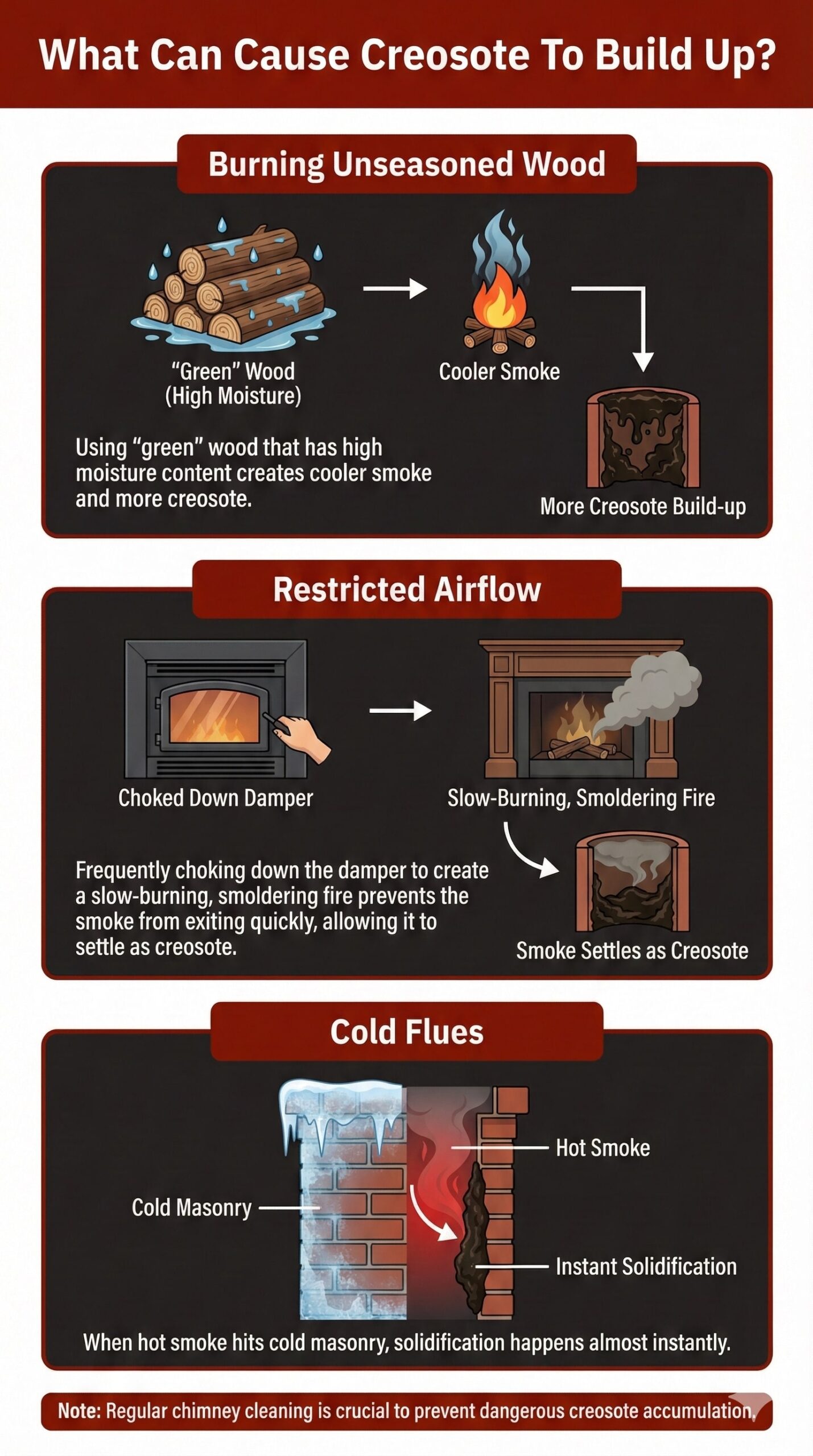
Creosote is a natural byproduct of burning wood, consisting of tar, smoke, and other organic vapors. When these substances travel up the chimney and encounter the cooler flue surface, they condense into a residue. Several factors can accelerate this process dramatically in just a few months:
-
Burning Unseasoned Wood: Using “green” wood that has high moisture content creates cooler smoke. This heavy, wet smoke condenses rapidly on the flue walls compared to dry, seasoned wood.
-
Restricted Airflow: Frequently choking down the damper to create a slow-burning, smoldering fire might extend the burn time, but it also lowers the flue temperature. This lack of heat prevents the smoke from exiting quickly, allowing it to settle as creosote.
-
Cold Flues: If your chimney is on an exterior wall, it stays colder than an interior chimney. When hot smoke hits this cold masonry, solidification happens almost instantly.
If these conditions exist, you could easily develop Stage 3 creosote (a glazed, tar-like substance) in a single winter. This specific type of creosote is highly combustible and extremely difficult to remove without professional tools. If this layer thickens during one season and is left unaddressed, the first hot fire you light the next autumn could ignite that residue. A chimney fire can burn at temperatures exceeding 2,000 degrees Fahrenheit. This intense heat can crack tile liners, melt mortar, and potentially transfer heat to nearby wood framing.
An inspection is the only way to gauge the actual level of buildup. By inspecting annually, our team can identify these heavy accumulations early and remove them, keeping your home safer and your system functioning properly. Skipping a year leaves you blind to the condition of the flue.
Your Winchester, VA Chimney Company: We Love This Historic Valley
Winchester is a vibrant community with a rich heritage that we are proud to be a part of. Located at the northern tip of the Shenandoah Valley, Winchester blends the charm of a small town with a significant historical footprint. It is perhaps best known as the “Apple Capital” and hosts the celebrated Shenandoah Apple Blossom Festival every spring, drawing visitors from all over to see the blooming orchards and parades.
We love working in Winchester because of the diversity of the homes and the pride residents take in them. We often find ourselves servicing properties near the Old Town pedestrian mall, a hub of dining and shopping that preserves the 18th and 19th-century architecture beautifully. The area is steeped in history, featuring sites like Stonewall Jackson’s Headquarters and the Museum of the Shenandoah Valley, which offers gorgeous gardens and trails.
Whether you are enjoying a walk through the serene paths of Jim Barnett Park or exploring the Civil War battlefields that surround the city, there is a deep sense of connection to the past here. For our team at Blue Ridge Chimney Sweeps, this means we often have the privilege of working on chimneys that have stood for generations. We treat every home, whether a historic brick manor or a contemporary suburban house, with the same level of care and respect that Winchester embodies.
Does Freeze–Thaw Weathering Accelerate Deterioration in Colder Climates, and How Can Waterproofing Slow It Down?
In the Shenandoah Valley, we experience a full four seasons, including winters that frequently dip below freezing. This climate creates the perfect conditions for freeze-thaw weathering, which is one of the most destructive forces acting on your masonry chimney. Bricks and mortar are porous materials, meaning they naturally absorb moisture from rain, snow, and sleet.
When the temperature drops below freezing, the physics of water can cause significant structural damage through a repetitive cycle:
-
Absorption: During rain or snow, the porous bricks and mortar joints soak up water like a hard sponge.
-
Expansion: As temperatures drop below 32°F, that trapped water freezes and expands by approximately 9%. This exerts tremendous internal pressure on the masonry.
-
Contraction: When the ice thaws, the water contracts, leaving behind microscopic cracks and voids where the material was forced apart.
-
Spalling: After repeating this cycle dozens of times over a winter, the face of the brick can shear off (spalling), and mortar joints can crumble.
Waterproofing is the most effective defense against this acceleration of decay. However, it is critical to use the correct type of product. We use vapor-permeable water repellents, typically siloxane or silane-based agents. Unlike a standard sealer or paint that traps moisture inside the brick, a vapor-permeable repellent prevents liquid water from entering the pores from the outside while still allowing internal water vapor to escape.
By applying this professional-grade waterproofing, we essentially create a shield that beads water off the surface before it can soak in. This drastically reduces the amount of moisture available to freeze within the masonry. While waterproofing cannot fix bricks that are already broken, it is an essential preventative measure that can extend the life of your masonry by decades.
Are Old, Unlined Chimney Interiors More Prone to Hidden Decay Even When the Exterior Bricks Look Strong?
This is a critical question for owners of Winchester’s many historic properties. It is very common to see a chimney that looks pristine on the outside, while the interior is deteriorating dangerously. The reality is that many older chimneys were built without a clay tile or metal liner, or with liners that have since degraded.
The exterior of your chimney faces weather, but the interior faces a harsh chemical environment. The byproducts of combustion are acidic. When smoke cools and condenses, it forms acids that eat away at the mortar joints from the inside out. In an unlined chimney, this acidic attack is happening directly to the structural masonry. Over decades, this can dissolve the mortar between the inner bricks, creating gaps that you cannot see from the yard. These gaps pose two major risks:
-
Pyrolysis: Heat and fire can travel through the masonry gaps to the combustible wood framing of your house. This lowers the ignition temperature of the wood over time, making it susceptible to catching fire at relatively low temperatures.
-
Gas Leakage: Gaps in the mortar can allow carbon monoxide and other hazardous flue gases to leak into the living spaces of your home rather than venting up and out.
The deceptive nature of this decay is why video scanning is a non-negotiable part of our inspection process for older homes. We lower a camera down the flue to see exactly what is happening on the inside. If we find that the interior mortar is missing or the bricks are softening, we will likely recommend installing a stainless steel liner or a resurfacing system. This creates a new, smooth, and airtight channel for the smoke, protecting the original masonry from further heat and acid damage.
How Fast Can Crumbling Mortar Compromise a Chimney’s Stability? Could It Really Collapse in Just One Season?
While it is rare for a chimney to go from “perfect” to “total collapse” in a single season, the rate at which stability is compromised can be surprisingly fast once the mortar begins to fail. Mortar serves as the glue that holds the masonry units together, but it also acts as a seal against water. Once that seal is broken and mortar starts to crumble or wash out, the deterioration curve becomes exponential rather than linear.
When mortar joints recede, they compromise the structure in several specific ways:
-
Water Pooling: Receded joints create ledges where water can sit. This leads to saturation that accelerates the breakdown of the surrounding brick.
-
Loss of Bond: Chimneys rely on the bond between the mortar and the brick to resist tipping over. If a significant percentage of the mortar loses its adhesive strength, the chimney loses its tensile strength.
-
Vertical Instability: If loose bricks are located in critical areas, such as the base of the stack, the chimney can lose its ability to support its own vertical load.
We often see “leaning” chimneys that appeared fine only a year or two prior. This lean is usually the result of long-term water damage that finally caused the masonry or the footing to shift. While a pile of bricks might not fall into your yard in one season, the chimney can become structurally unsound and dangerous to use in that timeframe. Regular tuckpointing, the process of grinding out old mortar and replacing it with fresh, compatible material, is vital. It stops the water entry and restores the structural bond, ensuring the chimney remains vertical and stable.
How Does Burning Different Fuels (Wood, Pellets, Gas) Change the Rate of Creosote Buildup and the Need for Sweeping?
The type of fuel you burn dictates the chemical composition of the residue left in your chimney, and consequently, the cleaning requirements. Understanding these differences helps you plan your maintenance schedule effectively.
-
Wood: Burning cordwood is the primary source of traditional creosote. As mentioned, wood smoke condenses into tar and soot. The rate of buildup depends on the moisture content of the wood and the temperature of the fire. Wood-burning chimneys generally require the most frequent sweeping—typically once a year or after every cord of wood burned—to remove the flammable solid creosote deposits.
-
Pellets: Pellet stoves are often marketed as cleaner, and while they are efficient, they are not maintenance-free. Pellets produce a very fine, powdery residue known as fly ash. While fly ash is not as flammable as glazed creosote, it can accumulate in the intricate venting systems of pellet stoves. Because the venting pipes are often smaller and have more elbows, they can clog quickly. We recommend cleaning pellet vents annually or after every ton of pellets burned to maintain proper draft.
-
Gas: Gas fireplaces (natural gas or propane) burn much cleaner than wood, so they do not produce creosote. However, gas combustion produces water vapor and acidic compounds that can lead to corrosion in the firebox or flue liner. We also frequently find debris like spider webs, bird nests, or ceramic log deterioration blocking the venting. While you do not need a “sweep” in the traditional sense, you absolutely need an annual inspection.
Regardless of the fuel, the byproduct of combustion must go somewhere. Whether it is sticky tar, powdery ash, or invisible acidic vapor, our team at Blue Ridge Chimney Sweeps knows exactly how to handle it to keep your system running as efficiently as possible.
Trust Us for Chimney Masonry Repair Near You in Winchester, VA
At Blue Ridge Chimney Sweeps, we believe that a well-built chimney is a thing of beauty and a source of comfort. Our team takes pride in offering thorough inspections, long-lasting masonry repairs, and friendly, reliable service that Winchester homeowners can count on. If your chimney needs attention, or if you simply want peace of mind before the next burning season, do not wait until a small issue becomes a costly problem.
Call Blue Ridge Chimney Sweeps today to schedule your masonry repair serviceand experience the difference that true professionals can make for your home.